Headless CMS for Small Business: Is It Overkill?
“Headless CMS” gets pitched as a universal upgrade, the modern, faster, more secure way to run a website. For a lot of small businesses, that pitch doesn’t hold up, and I’d rather tell you that directly than sell you something you don’t need.
We sell both models, traditional WordPress and headless WordPress, so we don’t have a structural reason to oversell headless the way a headless-only CMS vendor’s blog does. Here’s the honest case on both sides, and where we actually draw the line with clients.
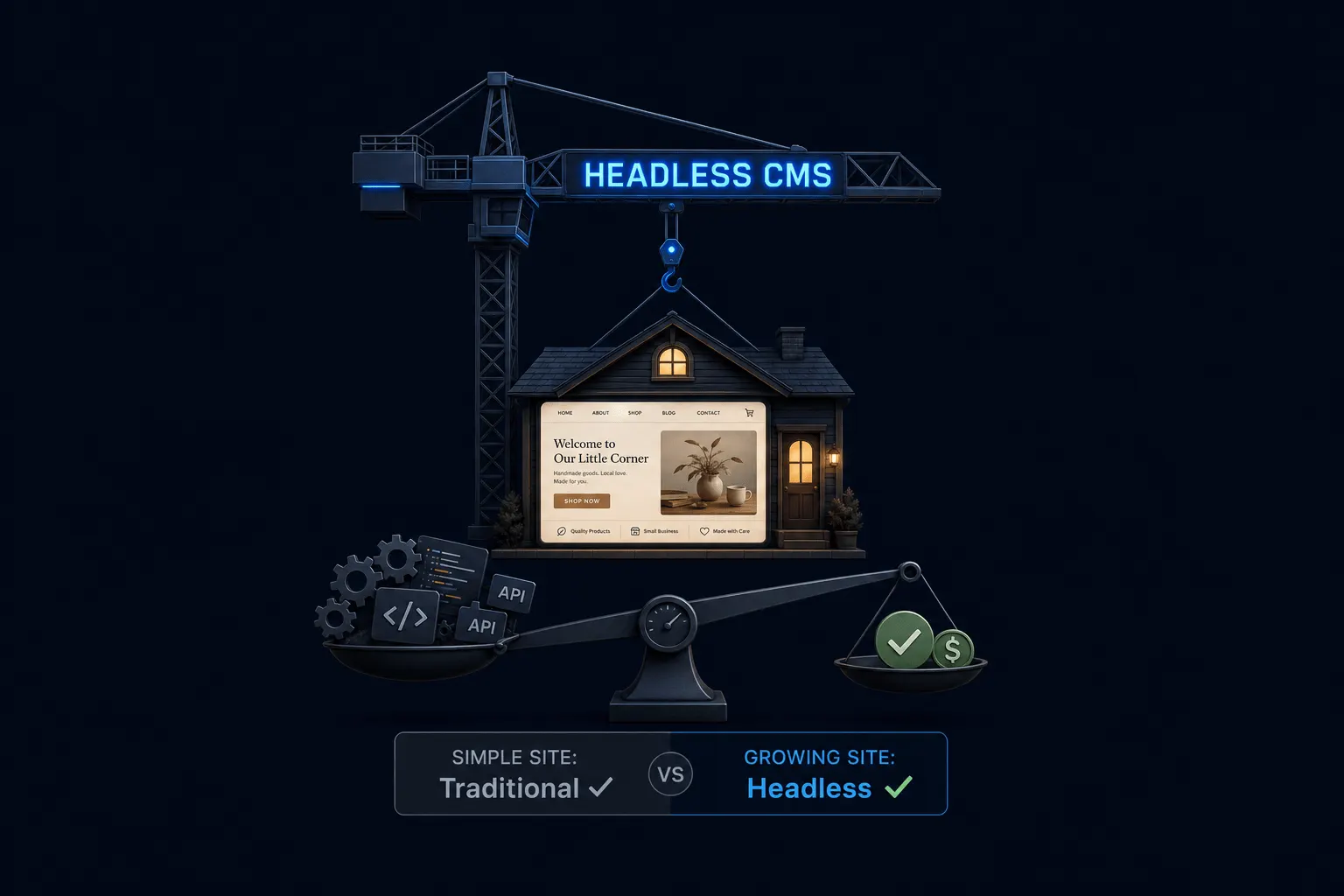
Key Takeaways: For a simple, low-traffic site that rarely changes, headless CMS is genuinely more complexity than most small businesses need. The added cost and reduced editing flexibility can outweigh the benefits. Once speed, security, growth, or SEO start to matter more, the calculus flips. Our own threshold: if a business is actively growing its content, competing on page speed, or planning to scale past a brochure site, headless earns its complexity. If it’s a five-page site updated twice a year, traditional CMS is still the right, unembarrassing call.
The Case That It’s Overkill
For a simple, low-traffic, rarely-updated site, headless adds real complexity cost without a proportional benefit.
Two things get lost, honestly. You typically lose the built-in WYSIWYG editor and live preview that traditional WordPress themes give you out of the box, and new page layouts usually need a developer rather than a customizer you can tinker with yourself. Cost research on fully custom headless CMS builds also matters here, though it needs the right context: agency-built, custom implementations commonly run anywhere from $10,000 to $100,000 or more for enterprise projects, with simpler integrations still landing in the $5,000 to $15,000 range. That figure describes custom, agency-delivered enterprise projects, not a flat-rate small-business product. It’s explicitly not what our own $79 a month Supernova plan costs, and I want that distinction stated plainly rather than left for a reader to assume.
The reader this section fits: a five-page brochure site, updated a couple of times a year, with no urgent speed or security pressure. If that’s your business, headless is genuinely more machine than you need right now.
The Case That It’s Not
Once growth, page speed, or security start to matter, headless’s added complexity starts paying for itself.
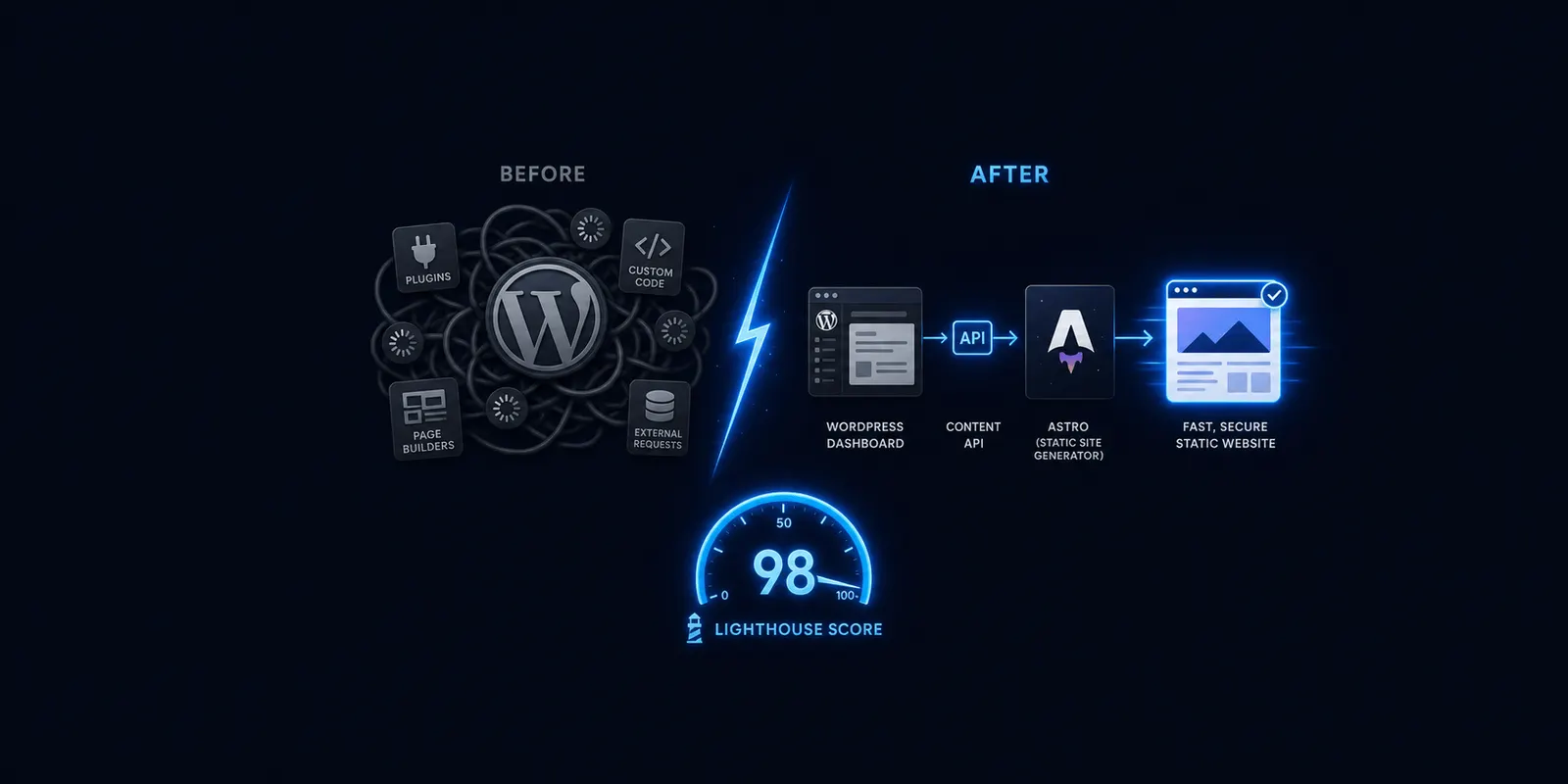
The speed case gets stronger the more a business actually depends on its site converting visitors. Industry roundups put the cost of load time at roughly 1 percent in lost conversions for every 100 milliseconds of delay, and e-commerce sites passing all three “good” Core Web Vitals thresholds reportedly see 15 to 30 percent better conversion rates. The security case matters too: WordPress plugins carry a documented history of vulnerabilities, with WPScan’s vulnerability database listing 14 separate issues for the WPML plugin alone since 2020.
A business actively publishing content, competing in a crowded local search market, or planning to scale past a single brochure site has a genuinely different cost-benefit line than the five-page site above. If your content strategy involves weekly blog posts, seasonal landing pages, or a growing service area, the complexity headless brings starts to look less like overhead and more like infrastructure.
Astrobot’s Own Threshold
Here’s the actual rule we use when recommending Orbit, our traditional WordPress plan, versus Supernova, our headless plan, to a prospective client. It’s a real filter, not a soft upsell toward the pricier option.
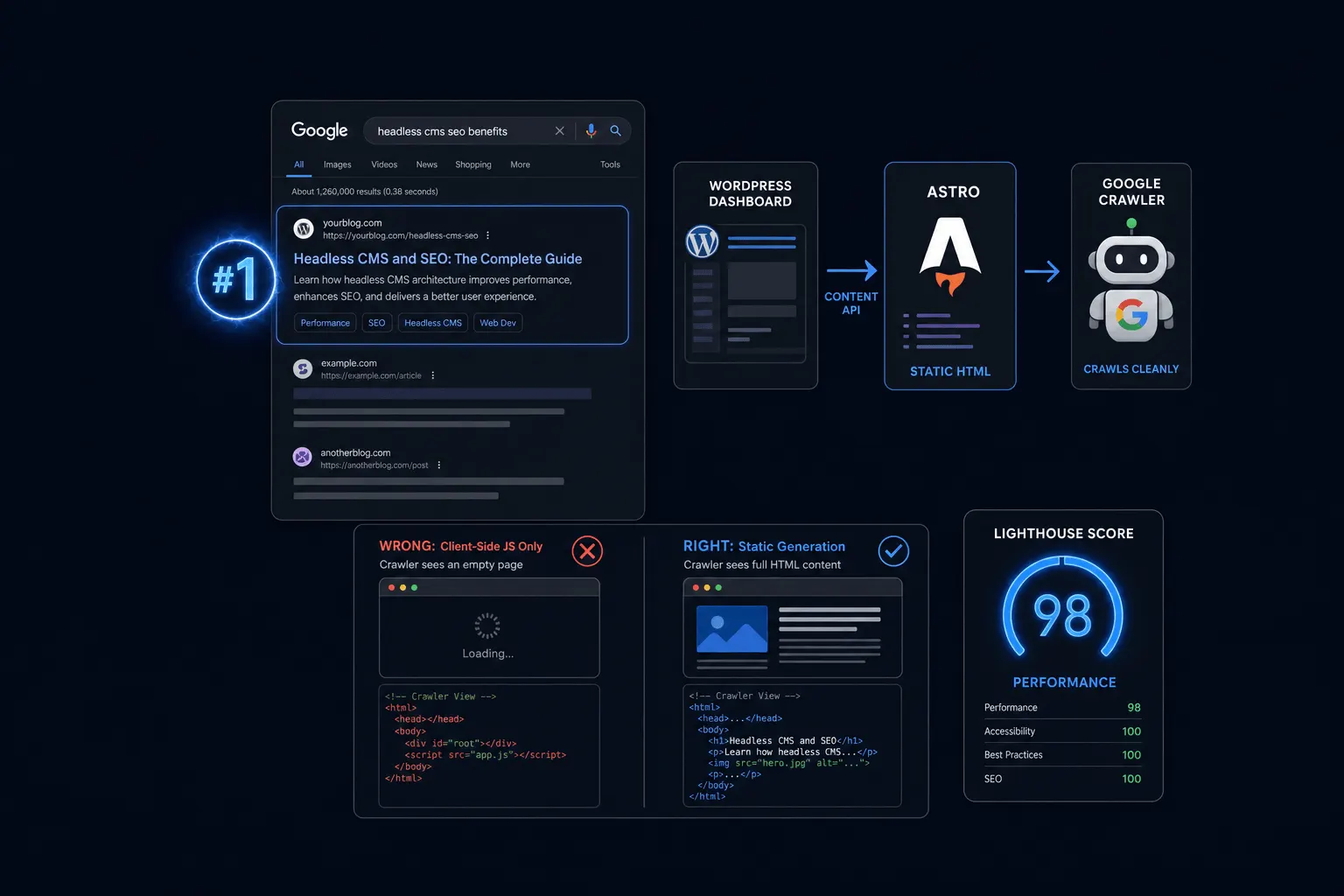
We push toward headless when a business is actively publishing content on a regular cadence, competing in a genuinely tight local SEO market, or expecting meaningful traffic growth over the next year or two. We don’t when a business publishes rarely, runs a simple site structure, and isn’t under urgent speed or security pressure. On speed specifically, I won’t cite an unverified percentage as part of that pitch. What I’ll say instead: static, pre-built architecture is built for meaningfully faster load times by design, and that’s a defensible, honest reason to recommend it when speed genuinely matters to a client’s business.
How to Decide for Your Own Site
- How often do you actually publish new content, weekly, monthly, or a couple of times a year?
- How much does page speed affect the leads or sales your website generates?
- Are you planning to grow this site’s content or traffic meaningfully over the next one to two years?
- Do you already have, or need, an ongoing developer relationship for your site?
If most of your answers point toward “rarely,” “not much,” and “no,” traditional CMS is still a sound, unembarrassing call. If they point the other way, headless is worth the added complexity. For the fuller technical comparison, read our head-to-head breakdown of headless vs. traditional CMS, or see what a headless plan actually includes on our Supernova page.
Frequently Asked Questions
Do I really need headless CMS for a small website? Not necessarily. If your site is simple, low-traffic, and rarely updated, traditional CMS is often the more sensible choice.
When does headless CMS stop being worth it? When the added cost and reduced editing flexibility outweigh the speed, security, and growth benefits, typically true for a simple brochure site with no urgent performance pressure.
The Bottom Line
Headless CMS isn’t a universal upgrade, and treating it like one does small businesses a disservice. It’s a genuine trade of editing simplicity for speed, security, and room to grow, and that trade only pays off once your business actually needs those things. Sometimes the honest answer is that your five-page site is doing exactly fine on traditional WordPress, and that’s not a lesser choice.
Not sure which side of that line your business falls on? Our pricing page compares Orbit and Supernova directly, or reach out and we’ll give you a straight answer, even if that answer is “you don’t need the pricier plan.”
Ready to put this into practice? Explore our web design services, view plans & pricing, or book a free consultation — no pressure, just honest advice.