Website Builder vs. Web Developer: Which Fits Your Business
“Website builder vs. web developer” gets searched a couple thousand times a month, and almost every result treats it like a binary: pick one. The real market has at least four distinct options, at four distinct price points, and most of the content ranking for that phrase only wants to sell you one of them.
This piece covers all four honestly: a DIY builder platform, a web design subscription, a freelance developer, and an agency. None of them is the universal right answer. Each one solves a different problem, and I’ve built sites across all four over more than 20 years of doing this work.
Key Takeaways: A website builder gets you speed and a low starting price, in exchange for working inside a platform’s limits. A web developer or designer gets you a site built around your business instead of a template, in exchange for a higher cost and a less predictable timeline. A web design subscription sits between the two: professional, custom-built work at a flat monthly rate closer to a builder’s pricing than a freelancer’s project quote.
What a Website Builder Actually Gets You
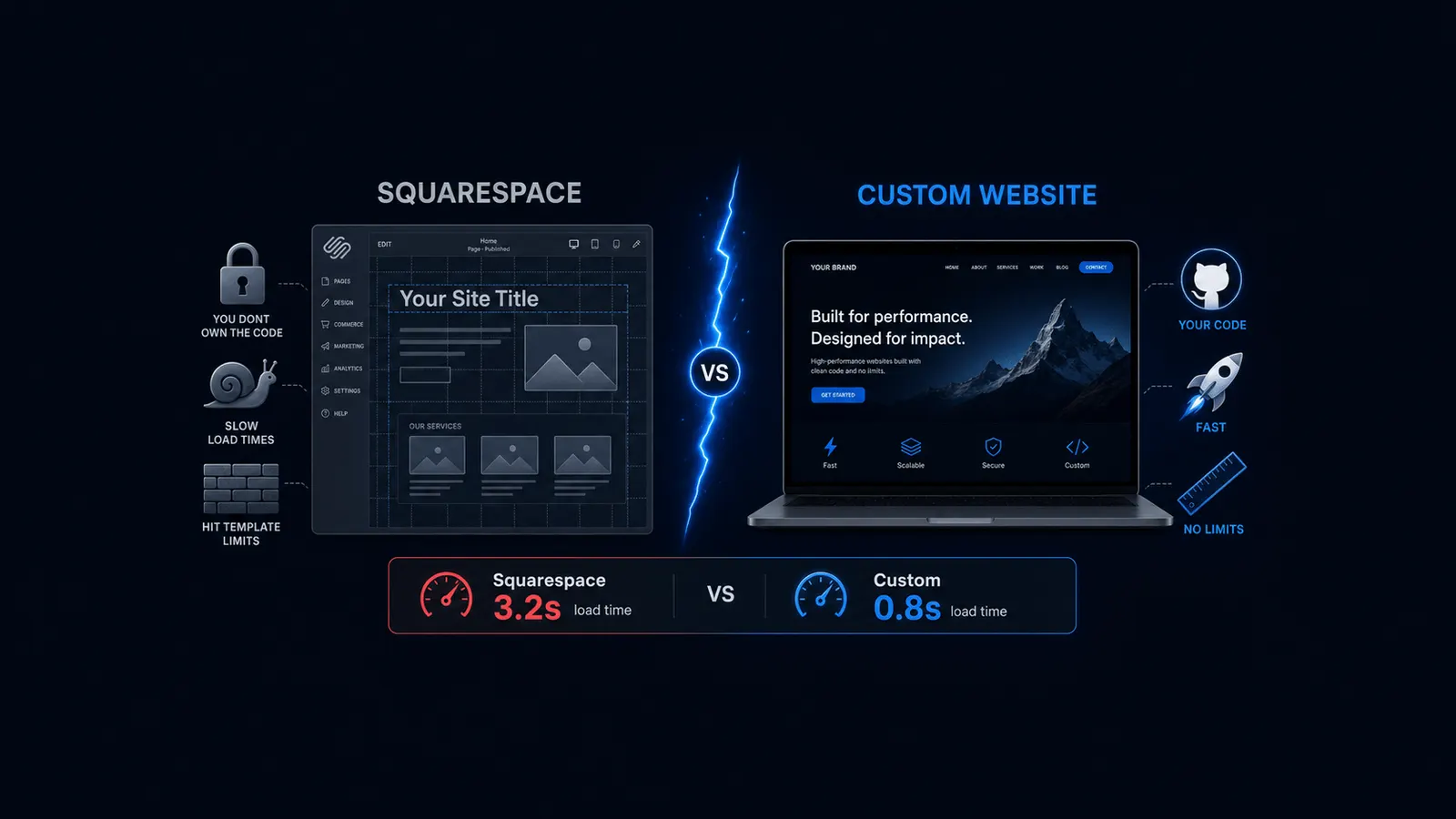
A website builder gets you speed and a low starting price, in exchange for working inside a platform’s templates and technical limits. Wix and Squarespace both handle hosting and basic security for you, which removes a real chunk of technical overhead a first-time founder doesn’t need to think about.
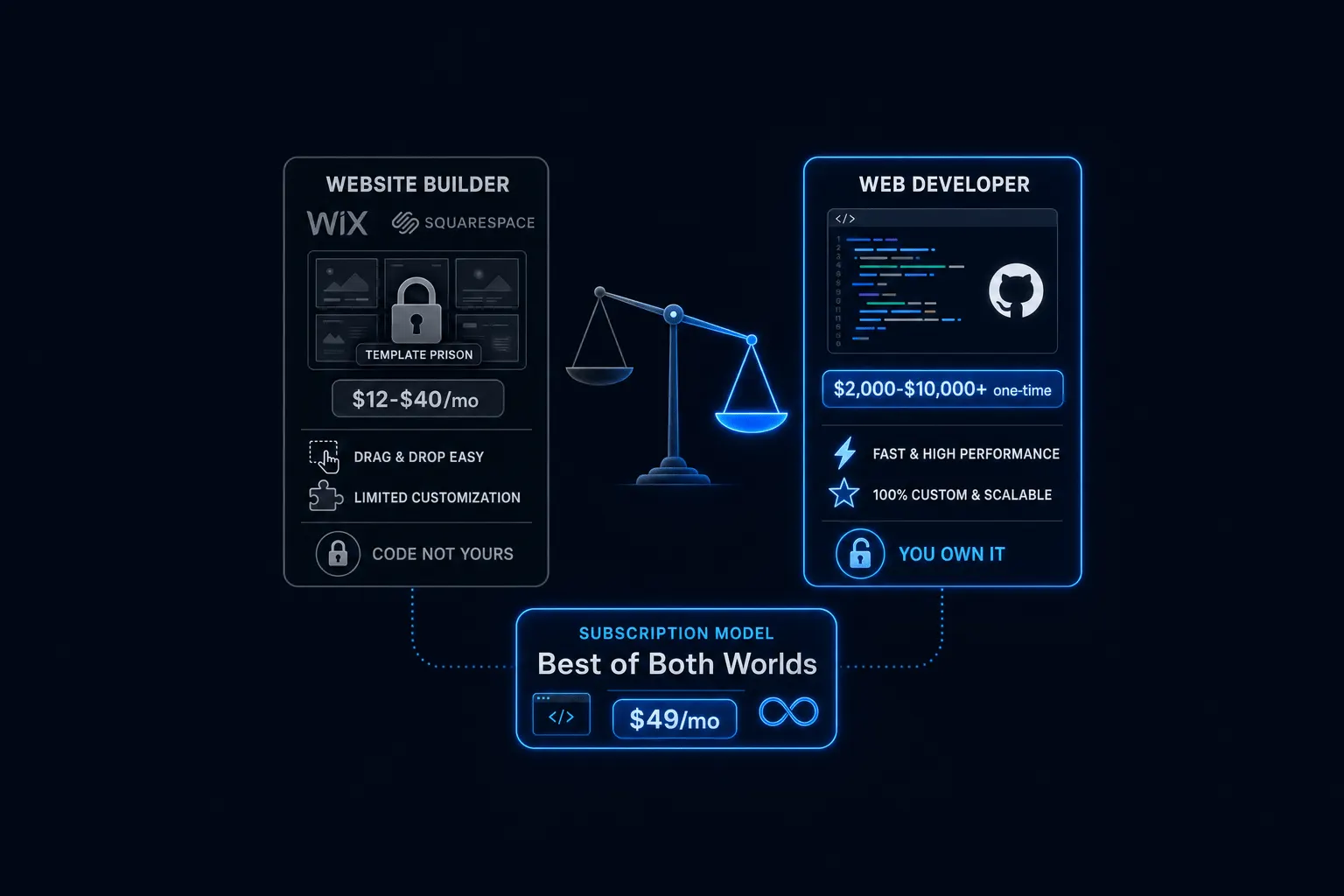
Builders run roughly $17-159 a month across tiers, based on 2026 vendor pricing, and about 70% of small and medium businesses adopt them specifically for cost savings and ease of use, according to howtohosting.guide’s 2026 builder statistics roundup. That’s a completely legitimate reason to choose one. For a simple business with a simple offer, a builder is a genuinely good fit, not a starter option you’re expected to outgrow immediately.
What a Web Developer or Designer Actually Gets You
A web developer or designer gets you a site built around what your business actually needs instead of a template’s assumptions about what a business like yours needs. That usually means custom functionality, more control over technical SEO, and no platform lock-in if you ever want to move the site elsewhere.
Freelance developers typically charge $50-150 an hour, with most small-business projects landing between $1,500 and $8,000, according to cost breakdowns from FreelanceNation and GruffyGoat. Agency builds run considerably higher, often north of $20,000 for more complex needs, per GigaPress’s 2026 cost comparison. Both paths come with a real tradeoff worth naming plainly: a higher upfront cost, a less predictable timeline, and a site that becomes expensive to change again once it’s built, unless you’ve arranged ongoing support. A developer maintenance retainer commonly adds another $100-300 a month on top, per FreelanceNation’s 2026 cost guide.
Where a Subscription Splits the Difference
A subscription splits the difference. It buys professional, custom-built work, the same kind of work a freelance developer does, at a flat recurring rate that’s structurally closer to what a builder platform costs than to a freelancer’s project invoice.
The differentiator that matters most here is what happens after launch. Ongoing changes are included in the rate, not billed separately, which removes the “it’s expensive to touch again” problem that shows up on both the DIY-and-outgrow-it path and the one-time freelance or agency build.
As a concrete example, Astrobot’s Orbit plan runs $49 a month and Supernova runs $79 a month, both flat-rate, both including ongoing changes as part of the price. I’m naming our own pricing here plainly, not as a pitch, because it’s the clearest way to show what a subscription structurally is: professional work, recurring cost, changes included.
A Decision Framework
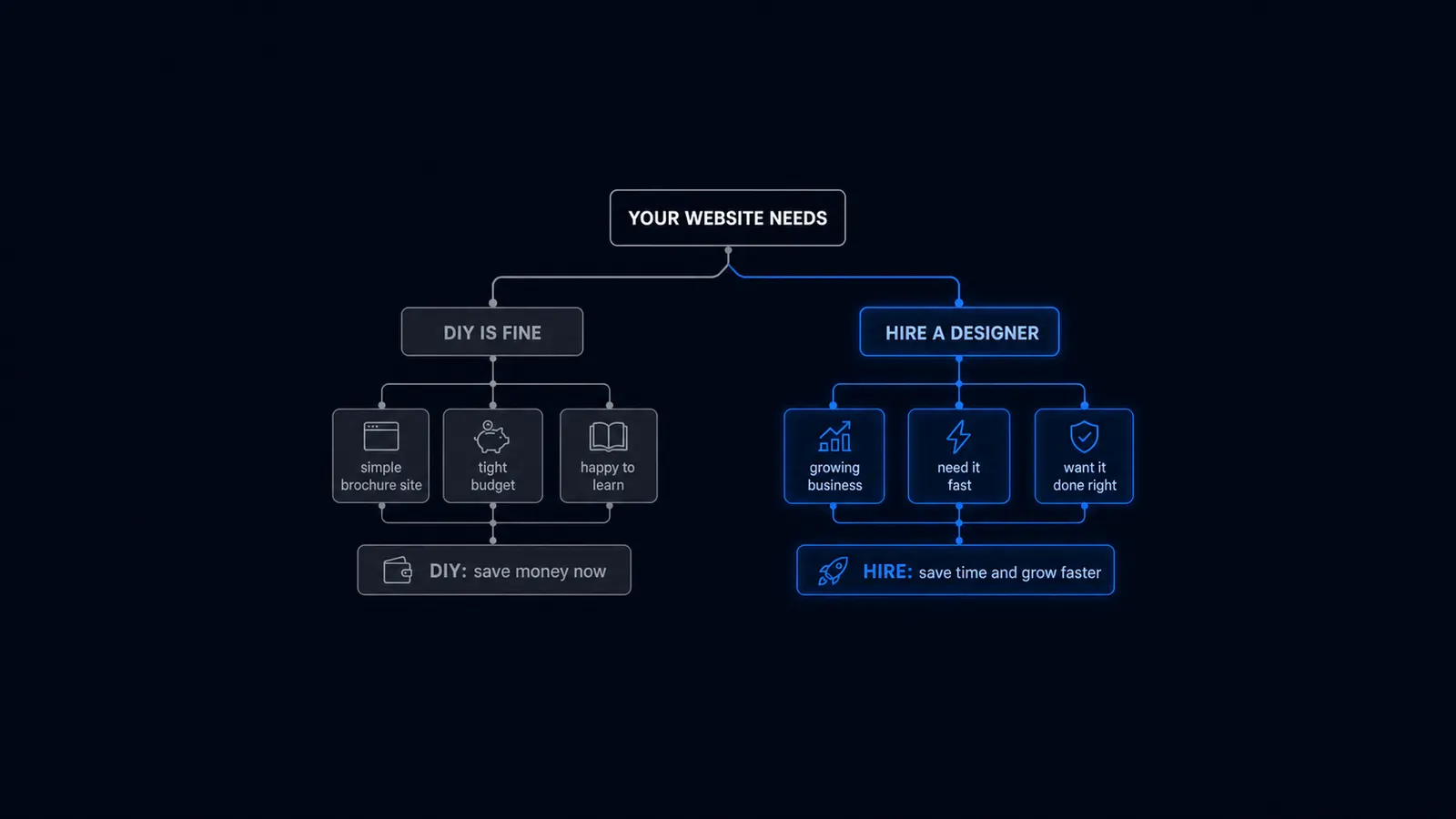
Picture these four options on two axes: cost and customization. A DIY builder sits at low cost and low customization. An agency sits at high cost and high customization. A subscription sits at low-to-moderate cost with customization closer to a freelancer’s than a builder’s. A freelancer sits in between on cost, with customization depending entirely on who you hire.
- How complex is the offer you’re selling?
- How often will the site realistically need to change?
- Is SEO-driven growth part of the business model?
- What’s the honest time budget for managing the site yourself?
There’s no universally correct answer in that list. What it does is narrow four options down to the one or two that actually fit your specific business, which is a more useful outcome than an abstract ranking of “best.”
Frequently Asked Questions
Is a website builder good enough for a small business? Often, yes, for simple offers with low customization needs. See the builder section above for exactly what “good enough” looks like in practice.
When do I need a real web developer instead of a builder? When the site needs custom functionality, deeper SEO control, or has already outgrown what a template can represent cleanly.
Is a web design subscription the same as hiring a freelancer? Similar output, different structure. You get comparable custom work, but at a flat recurring rate with ongoing changes included, instead of a one-time project invoice.
What’s the cheapest option long-term, not just upfront? It depends on how often your site needs to change. A subscription and a builder can end up similarly priced over time, but only one of them includes custom, professional changes as part of that price.
The Bottom Line
None of these four paths is wrong. The mistake is picking based on the label, builder vs. developer, instead of the actual tradeoff: what your business needs the site to do, and how much it’ll cost to keep changing it as that need evolves.
Start with the decision framework above. It’ll get you to one or two real options faster than another roundup comparing generic pros and cons.
If a subscription sounds like the middle path your business actually needs, see what’s included in Astrobot’s Orbit and Supernova plans.
Ready to put this into practice? Explore our web design services, view plans & pricing, or book a free consultation — no pressure, just honest advice.