Complete Website Packages Compared: What "All-Inclusive" Should Mean
“All-inclusive” and “complete package” show up across nearly every website vendor’s pricing page, and they don’t mean the same thing twice. One vendor’s “complete” includes hosting and security. Another’s “complete” is the design and build only, with hosting billed separately starting month two. The phrase alone tells a buyer almost nothing.
This closes out a month of writing about pre-built websites with the same honesty theme I’ve used elsewhere on this blog for subscription care plans: define what a term should actually guarantee, then compare offers against that definition, not against the label.
Key Takeaways: “All-inclusive” website packages should bundle design, hosting, security, and ongoing support into one predictable price, but the term isn’t standardized, and hidden costs of roughly $145-$640+ a year for hosting, domains, or security are common when it isn’t. Before comparing packages, check exactly what’s bundled versus billed separately.
What Vendors Often Mean by “All-Inclusive” (and What They Sometimes Leave Out)
Across the market, the common inclusions are design and development, hosting, and basic maintenance. What’s commonly excluded despite the “all-inclusive” label: security and SSL renewal, domain renewal, content updates beyond a set number, and ongoing support after a fixed initial window.
Industry cost guides from Oui.digital and BIZPROWEB put the hidden cost of these gaps at roughly $145 to $640 or more a year, for hosting, domains, and security, when they aren’t actually bundled into the advertised price. That’s a directional range from aggregated roundup content, not a precise universal figure, but it’s a real enough gap to check for before you sign anything.
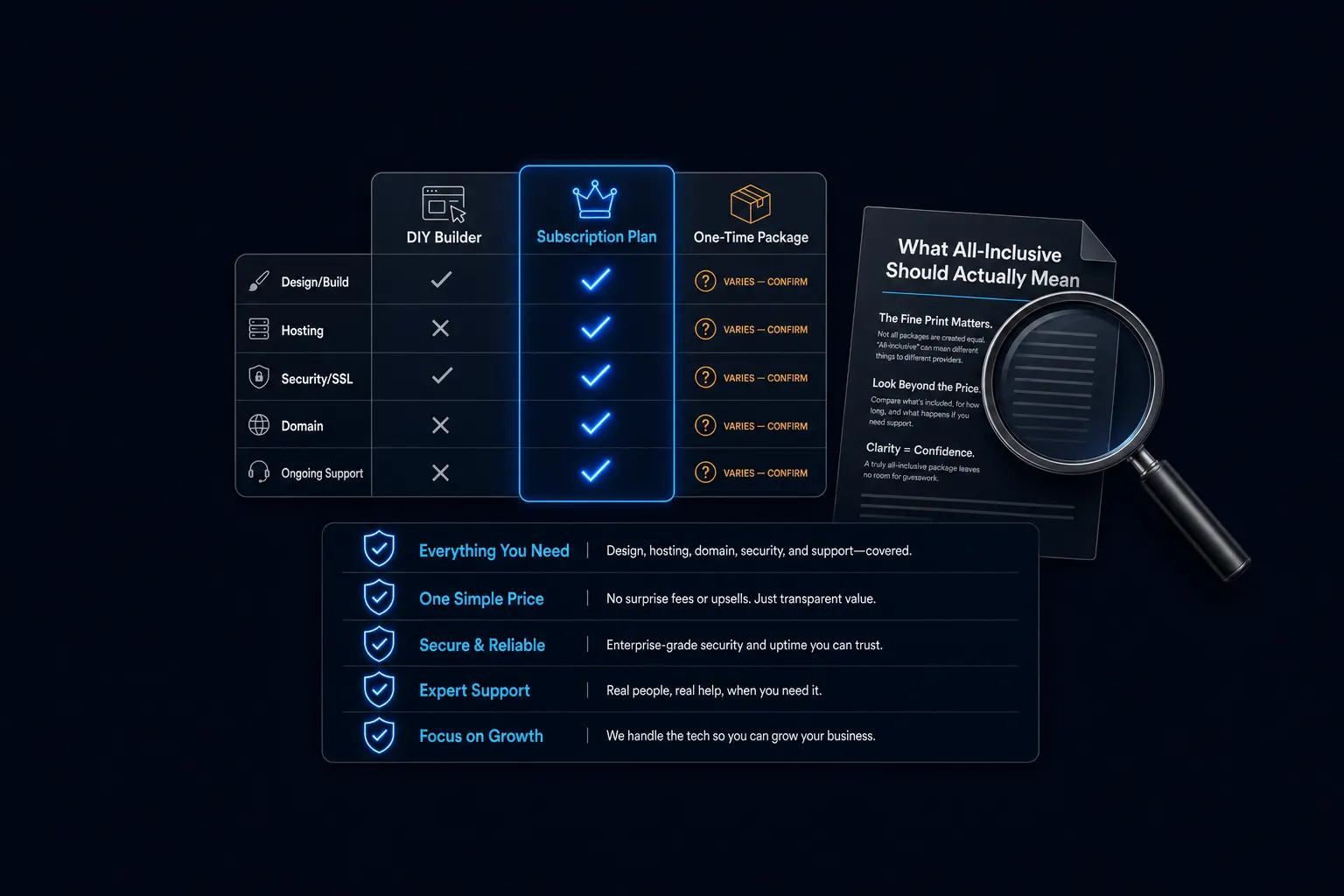
| DIY Builder | Subscription Care Plan | One-Time Complete Package | |
|---|---|---|---|
| Design/build | You do it yourself | Often included upfront | Included |
| Hosting | Included in platform fee | Sometimes included | Varies, confirm before buying |
| Security/SSL | Platform-managed | Often included | Varies, confirm before buying |
| Domain | Separate purchase | Sometimes included | Varies, confirm before buying |
| Ongoing support | None (self-service) | Defined, ongoing | Often limited to an initial window |
What “All-Inclusive” Should Actually Mean
A clear, useful definition: one predictable price covering design, hosting, security, and a defined level of ongoing support and updates, with no separate line items surfacing later for things a buyer reasonably assumed were already included.
Reputable pay-monthly, all-inclusive packages are built specifically to remove upfront costs and give buyers a predictable all-in monthly total, with no hidden fees appearing after the fact. That’s the standard other offers should be measured against, not a marketing phrase repeated without a specific list behind it.
A Checklist for Comparing “Complete” Packages
- Design and build: included, or an extra line item?
- Hosting: included, or a separate recurring charge?
- Security and SSL: included and renewed automatically, or the buyer’s responsibility to track and pay for?
- Domain: registered for the buyer as part of the package, or a separate purchase?
- Support and updates: a defined, ongoing scope, or a one-time delivery with no path forward after launch?
Run any vendor’s “complete package” claim against this list before comparing price. Two packages at the same price can bundle completely different things.
Astrobot’s Package as the Worked Example
Astrobot’s marketplace pricing bundles the design and build, the 60-minute customization session, and hosting setup into the listed price. Whether specific terms like ongoing support scope or long-term hosting responsibility apply beyond that initial setup is worth confirming directly against the current listing terms before you buy, the same advice that applies to any vendor, not a hedge specific to this one.
The standard is the same one I laid out in hidden costs in website care plans, just applied to a one-time package instead of a monthly subscription. Whether you’re comparing recurring care plans or one-time complete packages, the question is identical: what’s actually bundled, and what shows up as a surprise later?
Red Flags in “All-Inclusive” Marketing
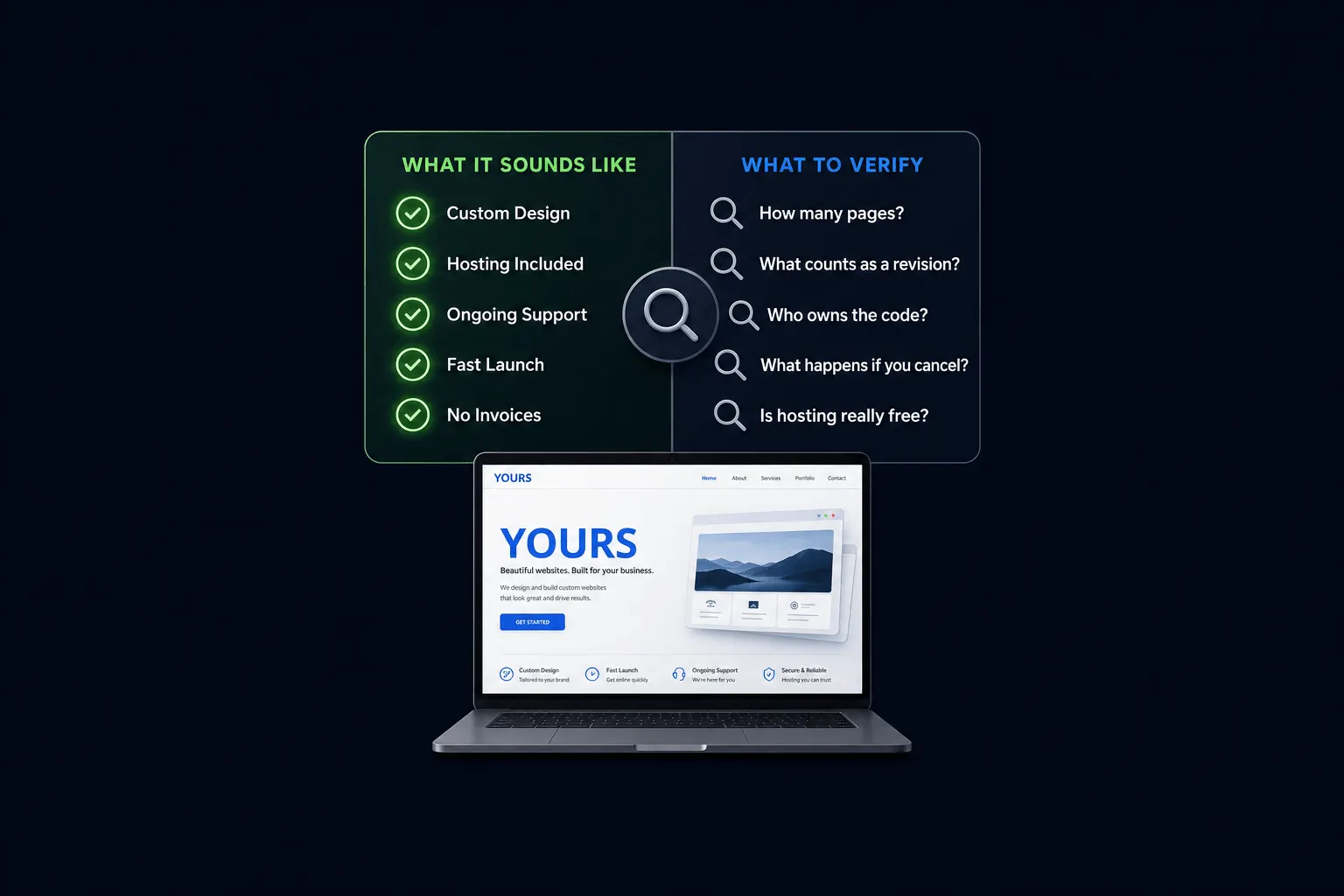
- Vague language like “everything you need” without a specific, itemized list.
- No mention of what happens after year one, which is usually where renewal costs quietly appear.
- Reluctance to state hosting and security terms plainly upfront, before you ask.
Frequently Asked Questions
Does “all-inclusive” always mean no hidden costs? No. The term isn’t regulated, which is exactly why a buyer needs the checklist above rather than trusting the label by itself.
What’s most commonly left out of “complete” website packages? Security and SSL renewal, domain renewal, and support scope after an initial window are the most common gaps between what “complete” implies and what’s actually included.
Is a cheaper “complete package” always a worse deal? Not necessarily. Price alone doesn’t tell you what’s bundled. Compare against the checklist, not just the sticker price, before assuming cheaper means less complete.
How does this compare to a monthly subscription model? See hidden costs in website care plans for the recurring-fee version of this exact question. The honesty standard is the same either way.
The Bottom Line
“All-inclusive” is a marketing phrase until you check it against a real checklist. Design, hosting, security, domain handling, and defined ongoing support are the five things worth confirming before you compare price at all.
That standard applies whether you’re comparing Astrobot’s package, a competitor’s, or a monthly subscription care plan. Check the substance, not the label.
See the full buyer framework this closes out in the complete buyer’s guide to pre-built websites, or browse Astrobot’s marketplace to see what’s actually bundled in a real listing.
Ready to put this into practice? Explore our web design services, view plans & pricing, or book a free consultation — no pressure, just honest advice.