Unlimited Web Design Subscriptions: Are They Worth It?
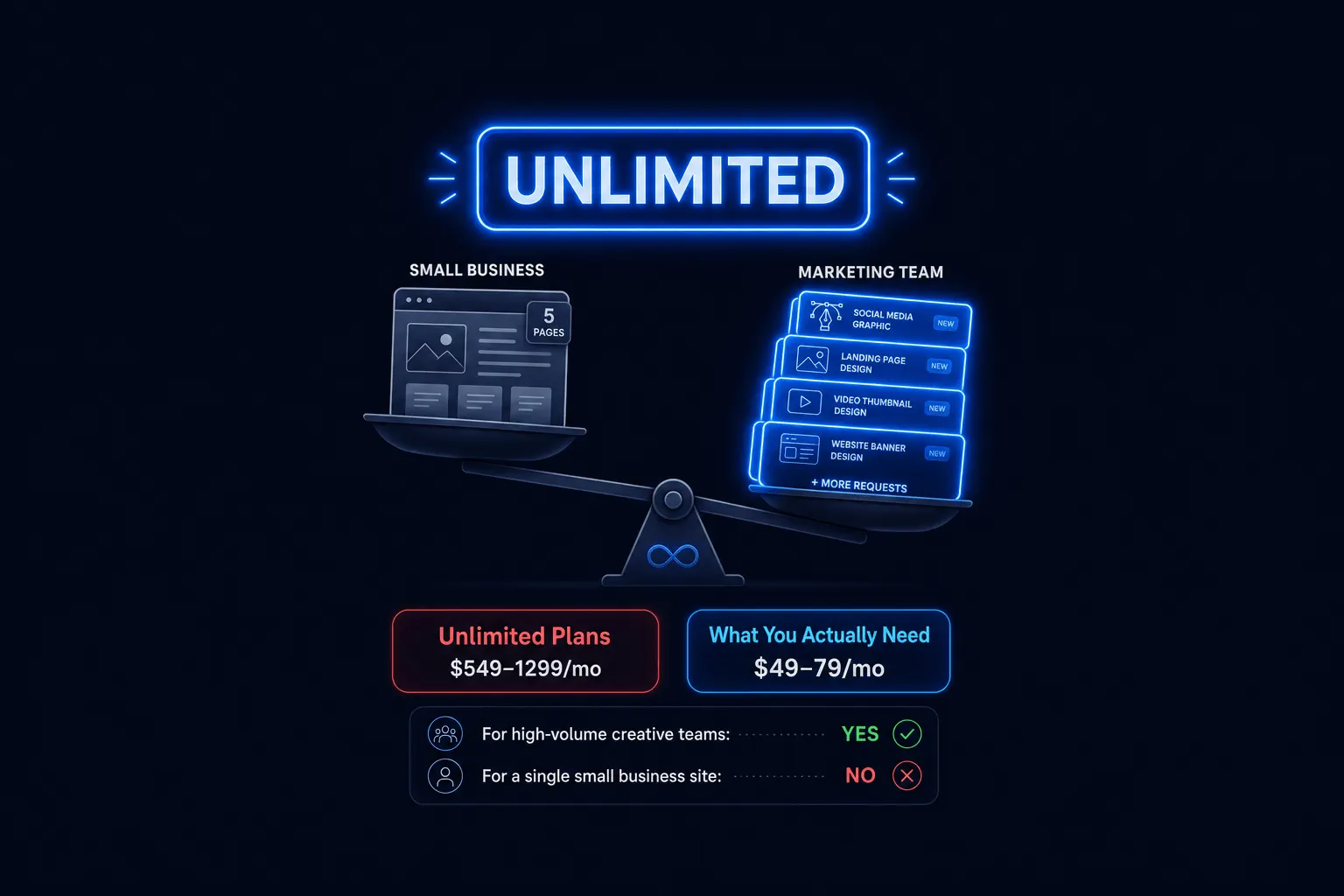
“Unlimited design requests” is a genuinely good pitch, and it’s built for a buyer who isn’t a plumber, a therapist, or a shop owner googling “how much does a website cost for my business.” These subscriptions run $549 to $1,299 a month, which is more than most small businesses spend on marketing altogether, and they’re priced that way on purpose. The question worth asking isn’t whether the model works. It’s whether it works for you.
I want to be direct about something up front: this isn’t a takedown of unlimited design subscriptions. They’re a real, well-built product for a real buyer. It’s just usually not the buyer reading a post like this one, and almost none of the content written about this category says that plainly, because most of it is written by the vendors selling it.
Key Takeaways: Unlimited web design subscriptions, running $549 to $1,299 a month, are built for marketing teams and funded startups generating a steady stream of design requests, commonly cited around 8 or more a month before the model outpaces paying per project. A local service business updating hours, adding a page, or refreshing copy a few times a year doesn’t generate that volume. It needs a website, not a creative department.
How “Unlimited” Web Design Subscriptions Work
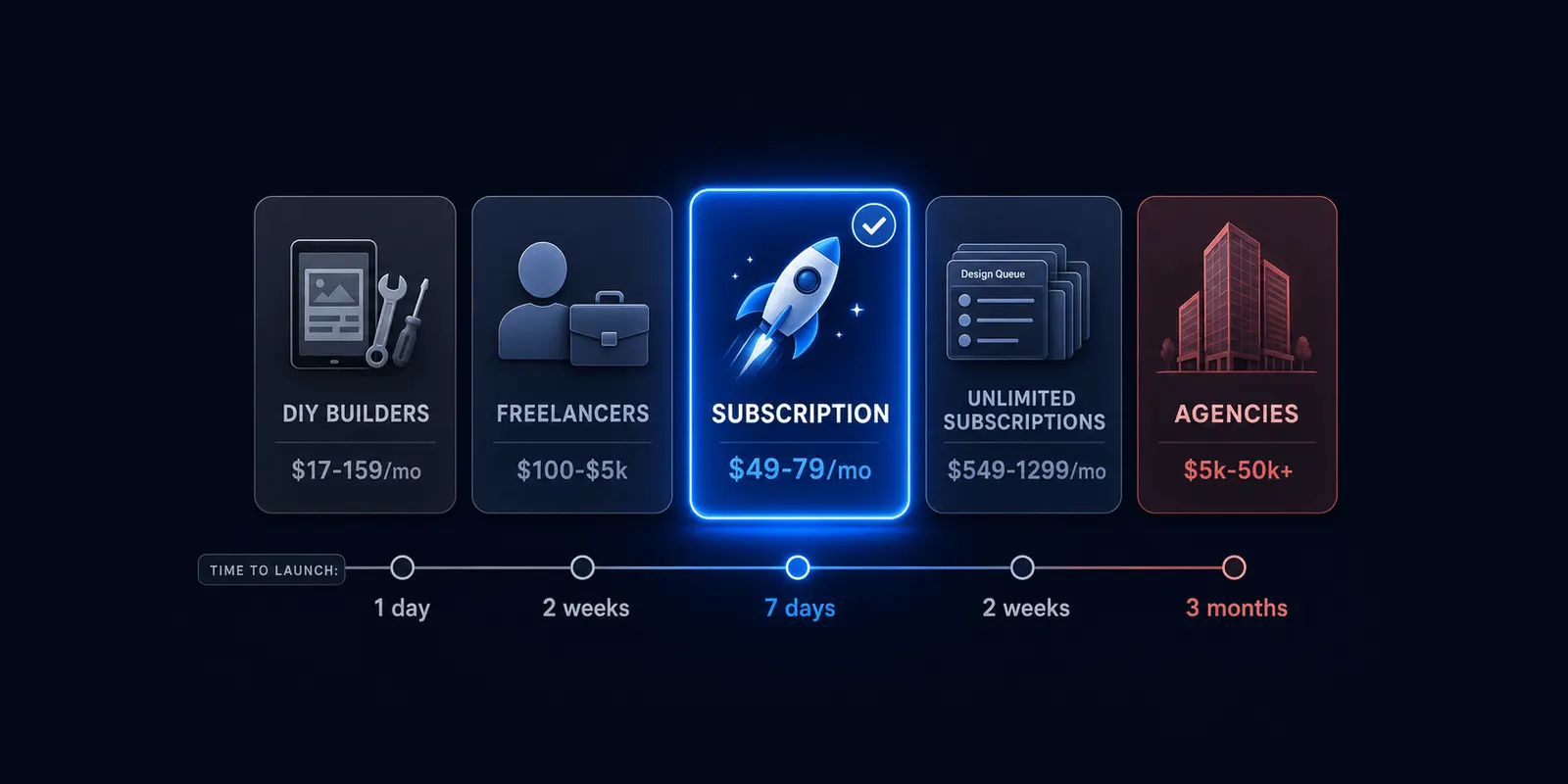
The model is consistent across the category: pay one flat monthly fee, submit design requests into a queue, and get a dedicated designer with a defined turnaround per request, usually 24 to 48 hours. Buzzcube runs $650 a month and targets agencies and in-house teams needing overflow capacity. ManyPixels runs $549 a month on its Advanced plan, up to $999 to $1,299 on its Business tier, aimed at marketing teams. Zyner runs roughly $1,000-plus a month for funded, YC-track startups. Draftss and DesignJoy run $250 to $500-plus a month, more geared toward solo founders and indie hackers. These are each vendors’ own published numbers, though I haven’t re-verified them against live pricing pages in this pass, so check current pricing directly before treating any figure as final.
Here’s the part that matters most and gets glossed over in most marketing for this category: “unlimited” means unlimited requests, not unlimited simultaneous work. Most models cap you to one active request at a time. Submit five things at once and four of them sit in the queue while the designer works through the first. That’s not a flaw, it’s how the pricing stays sustainable for the provider, but it changes what “unlimited” actually buys you.
What Request Volume Actually Justifies the Price
A business submitting 8 to 12 requests a month moves through an unlimited queue efficiently enough that the model pencils out. Below roughly 8 to 10 requests a month, a freelancer or a per-project provider is typically the cheaper path. That threshold comes from general unlimited-graphic-design subscription research, not a study specific to website design, and I’d rather flag that honestly than present it as more precise than it is.
Do the math out loud and the reasoning holds up regardless of the exact threshold. At $650 a month and 8 requests, that’s about $81 per request, a reasonable rate if you genuinely need that volume every month. At 2 requests a month, that same $650 works out to $325 per request, a bad deal for almost anyone. The subscription price doesn’t change based on how much you use it. Your actual usage is what determines whether it’s a good deal or a wildly expensive one.
For businesses that do generate consistent design volume, the $400 to $700 a month range is commonly cited as where the value equation starts to make sense. Below that volume, you’re paying for capacity you’re not using.
Why Most Small Businesses Need a Website, Not a Creative Team
A plumber, a therapist, or a shop owner typically needs a handful of updates a year: hours change, a new service page goes up, a seasonal promo runs for a month. That’s not weekly design requests. It’s not even monthly, most of the time. Compare that to who the unlimited model genuinely fits: marketing teams running constant campaigns that need new ad creative every week, funded startups with an active creative pipeline testing landing pages, or agencies that need overflow capacity when their own team is at capacity.
This is a fit question, not a quality judgment. Those platforms serve their actual buyer well. A local service business just isn’t that buyer, and paying $650 a month for a queue you touch twice a year is a worse deal than almost anything else available to you.
Where Astrobot’s Model Differs
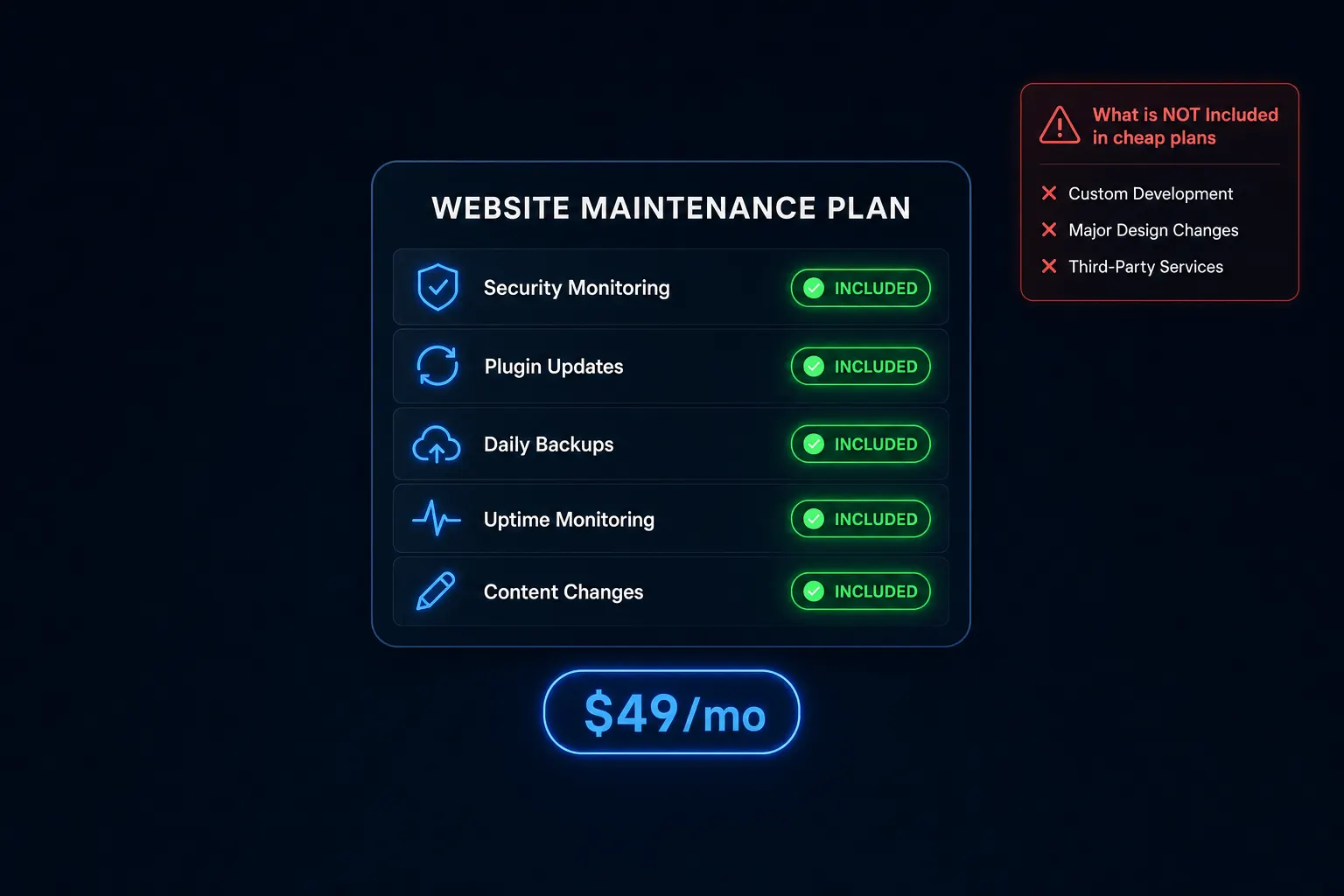
Astrobot’s flat $49 to $79 a month model isn’t unlimited-request. It’s built around owning a single small-business website, with ongoing changes through a dedicated designer included, no per-request queue math required. Orbit, at $49 a month, covers a 5-page site. Supernova, at $79 a month, covers unlimited pages plus a headless WordPress blog. Both include hosting and updates as part of the flat price, not as separate line items. Full details are on the pricing page.
If you genuinely need unlimited, high-volume creative output, this post should say that plainly: go look at ManyPixels or a similar platform, because that’s what they’re built for. Astrobot isn’t a substitute for a creative department, and pretending otherwise wouldn’t do either you or the comparison any favors. For the full context on how this pricing category breaks down more broadly, this piece on the market’s pricing gap is worth reading alongside this one.
Frequently Asked Questions
Is unlimited web design worth it for a small business? It depends entirely on request volume. Most small businesses don’t generate enough monthly requests to make the math work in their favor.
What counts as a “request” in an unlimited design subscription? Typically one task in the queue at a time, a graphic, a page edit, a design asset. Simultaneous or bulk requests usually aren’t included in the base price.
How is unlimited web design different from a flat-rate subscription like Astrobot’s? Unlimited models price for volume and queue-based creative work. Flat-rate models like Astrobot’s price for owning and maintaining one website.
Who should actually consider an unlimited web design subscription? Marketing teams, funded startups, or agencies with a steady, ongoing stream of design requests, not a single local-service website.
The Bottom Line
Unlimited web design subscriptions aren’t overpriced. They’re priced for a different buyer than most small businesses actually are. Before you sign up for one, count how many design requests you’ve genuinely made in the last six months. If that number is under 8 a month, you’re likely paying for capacity you won’t use.
If what you actually need is a single, well-maintained business website rather than a creative pipeline, see Astrobot’s flat-rate plans for a model built for exactly that.
Ready to put this into practice? Explore our web design services, view plans & pricing, or book a free consultation — no pressure, just honest advice.